Keywords : acne treatment in Songdo, adult acne, acne treatment, acne scars, dark spots after acne |
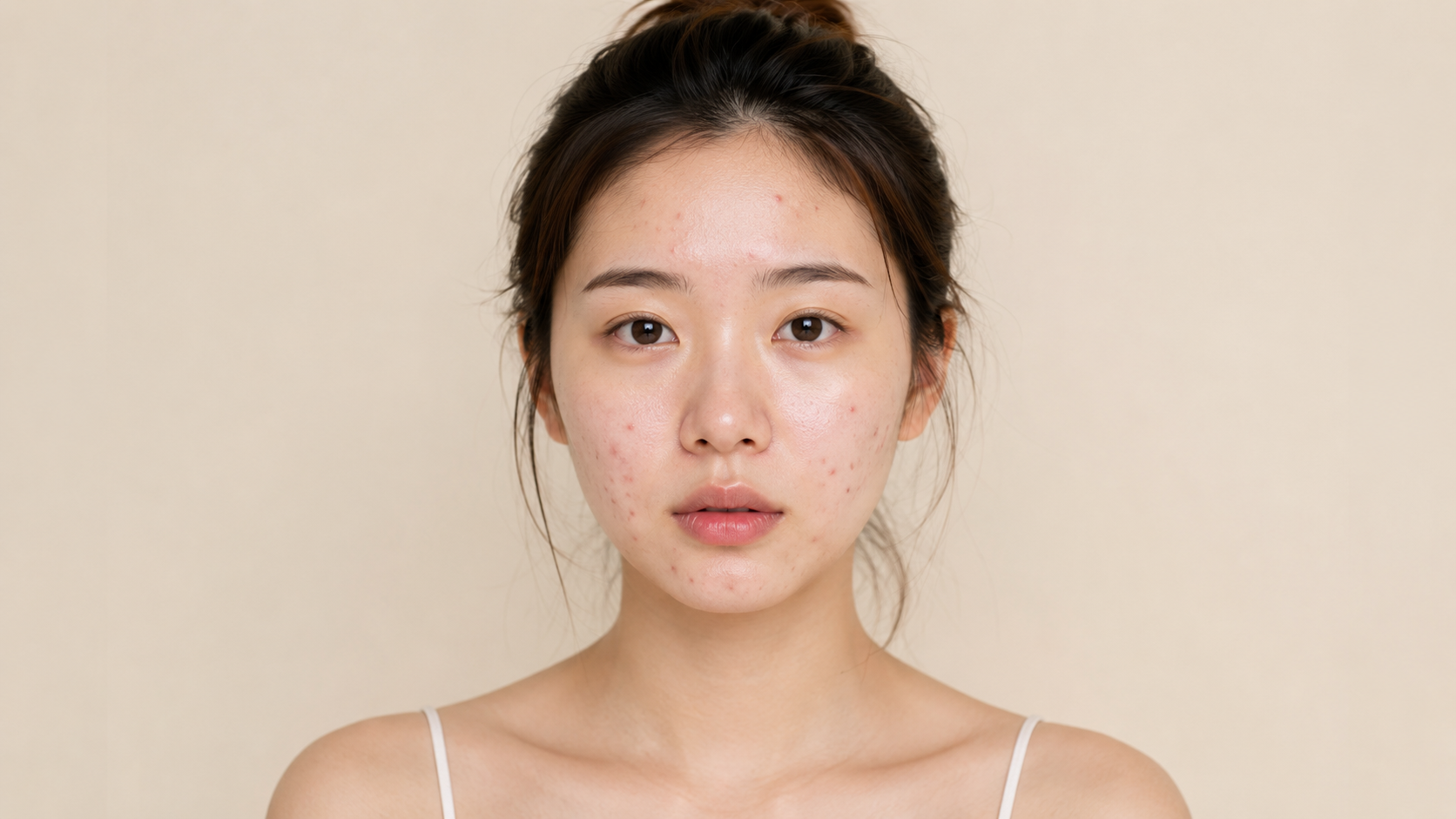
At Songdo Human Dermatology, we often hear patients ask why they are still breaking out as grown adults. Acne (acne vulgaris) is not just a teenage problem. It develops in adulthood too, and once you know the cause, the right treatment plan becomes clear.
What Causes Acne?
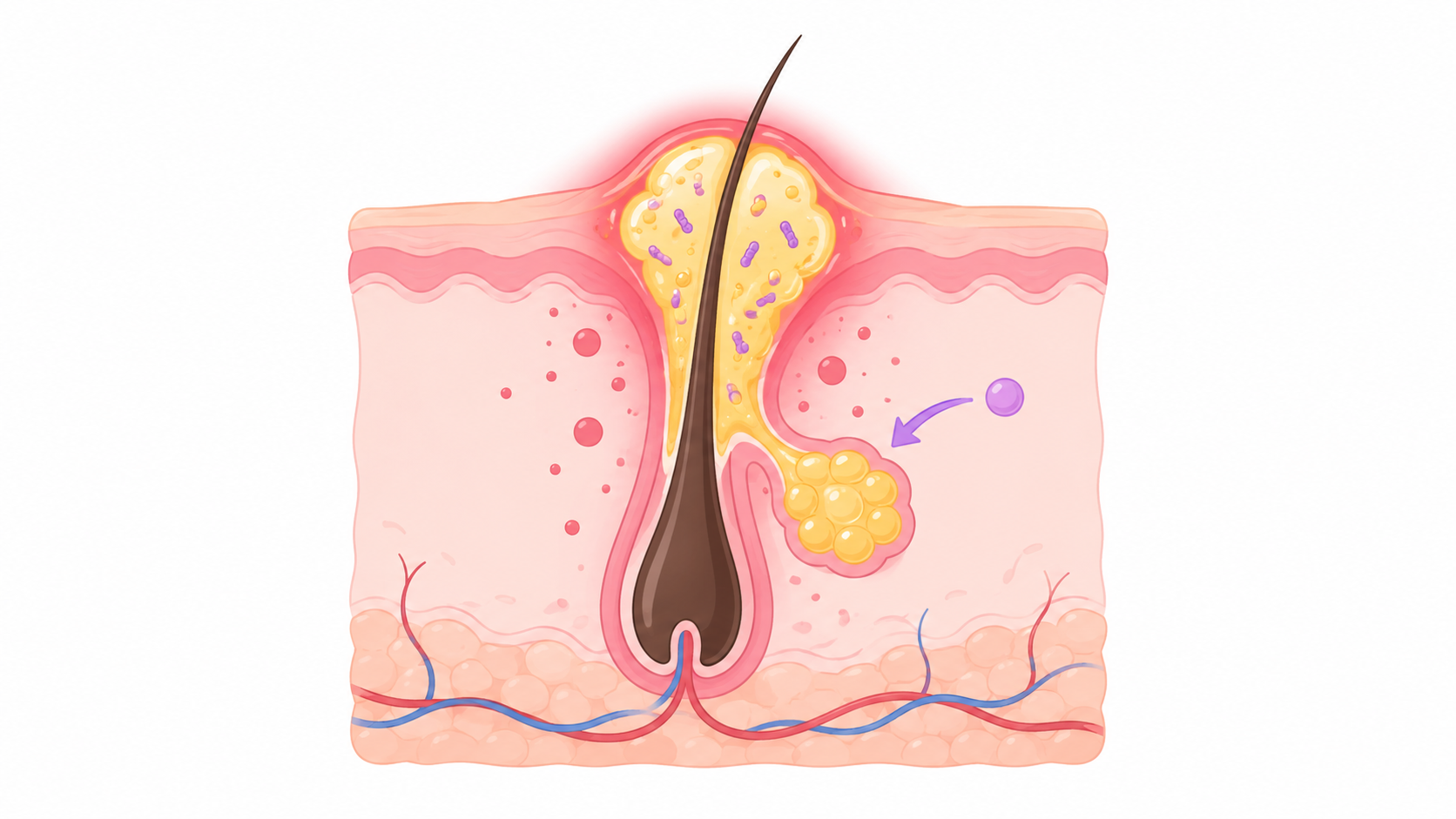
Acne develops when four factors come together: dead skin cells build up inside the pore and clog the opening, sebum (oil) production rises, acne bacteria (Cutibacterium acnes) multiply, and inflammation sets in. On top of this, hormones such as androgens (male sex hormones) play a role. That is why acne continues into adulthood — and in women especially, it can flare up around the chin and mouth with the menstrual cycle or other hormonal changes.
Types of Acne: From Comedones to Nodules
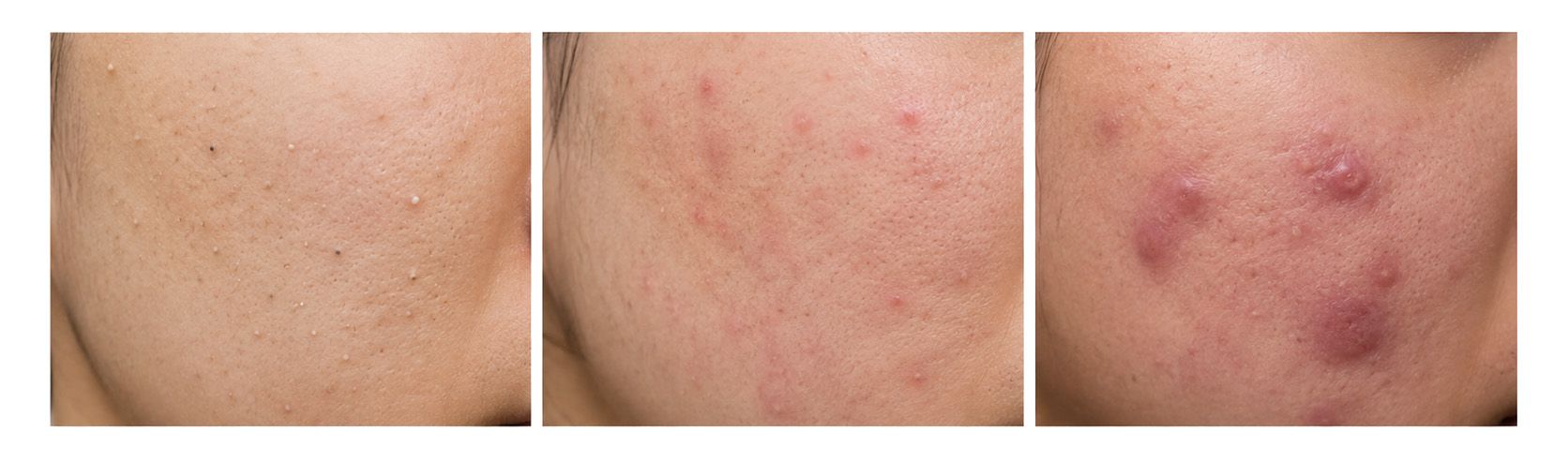
Let's start with the comedo — a clogged pore without inflammation. Comedones come in two forms: closed comedones (whiteheads), where the pore opening is sealed over, and open comedones (blackheads), where the pore stays open and the trapped material oxidizes and darkens. Once inflammation develops, they progress to red, swollen papules, pus-filled pustules, and deeper, firmer nodules. Treatment differs by type and depth, and deep acne such as nodules is more likely to leave scars, so early care is best.
How We Treat Acne
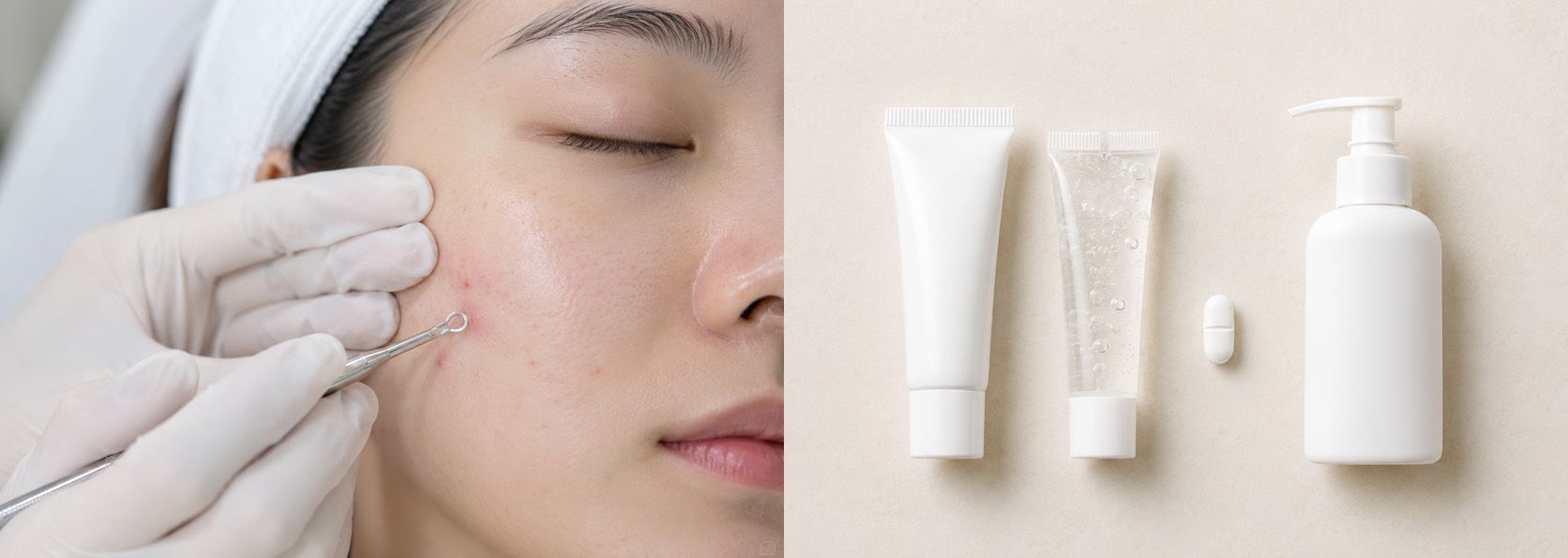
For mild acne, topical medications are the mainstay of treatment. A topical retinoid (a vitamin A derivative), which unclogs pores, is paired with benzoyl peroxide, which reduces acne bacteria and helps prevent antibiotic resistance. For moderate to severe acne, oral antibiotics are added. For deep, stubborn acne, we may prescribe isotretinoin, an oral medication that shrinks the sebaceous (oil) glands. Isotretinoin, however, is absolutely contraindicated during pregnancy (it is a teratogen — a drug that can cause birth defects) and requires a physician's prescription with regular lab monitoring. For women, anti-androgen medications, which counter the effects of androgens, may also be an option — one we can talk through at your visit.
Preventing Acne Scars
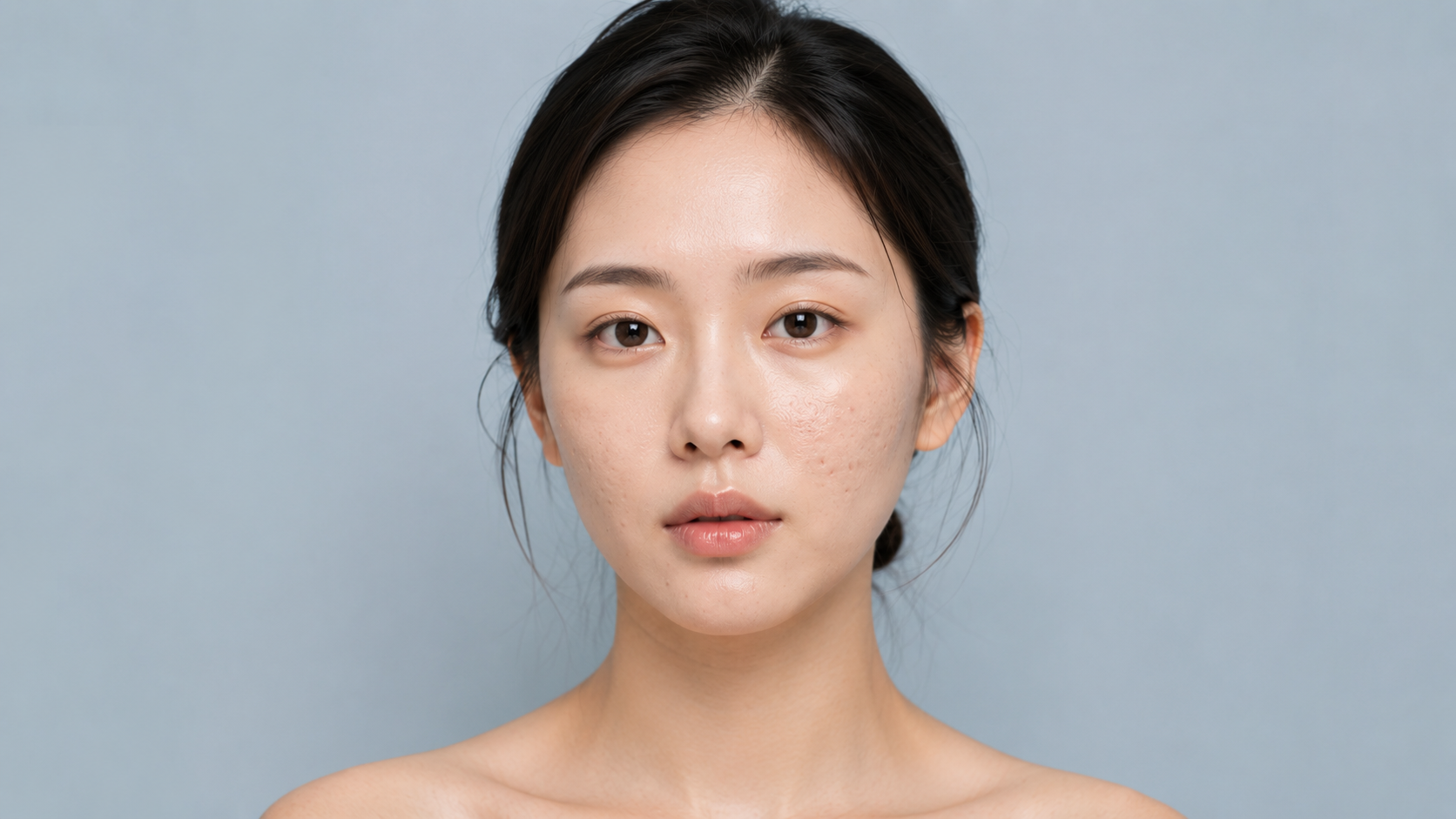
The most important rule is not to pick at or squeeze your pimples. Squeezing drives inflammation deeper, making atrophic scars (depressed, pitted scars) and dark marks more likely. The brown marks left behind after a breakout clears are called post-inflammatory hyperpigmentation (PIH), and sun exposure makes them darker, so daily sun protection matters, too. If scars have already formed, we match the treatment to the scar type after examining your skin in person.
Frequently Asked Questions
Q. I'm past puberty — why do I still get acne?
A. Adult acne is not uncommon. It arises from excess oil (sebum), clogged pores, acne bacteria (Cutibacterium acnes), and inflammation, with hormonal changes layered on top — and stress, cosmetics, and lifestyle factors can contribute too. If it keeps coming back, it is worth looking into the causes together.
Q. Is it okay to pop pimples?
A. We do not recommend it. Popping or squeezing spreads the inflammation and can leave atrophic scars and dark marks (post-inflammatory hyperpigmentation). Deep lesions such as nodules especially should never be handled on your own — it is safer to have them treated in the office.
Q. Are oral acne medications safe?
A. They work well, and that is exactly why they call for careful use. Isotretinoin is contraindicated during pregnancy and can cause side effects such as dry skin and chapped lips, so it must be taken under a physician's supervision, with regular lab monitoring.
If acne is bothering you, start with an in-person evaluation here in Songdo to check its type and severity. Before scars have a chance to form, we can decide on the right treatment together.
This content is general information about acne treatment provided at Songdo Human Dermatology. Diagnosis and treatment are determined during an in-person examination, based on each patient's individual condition.