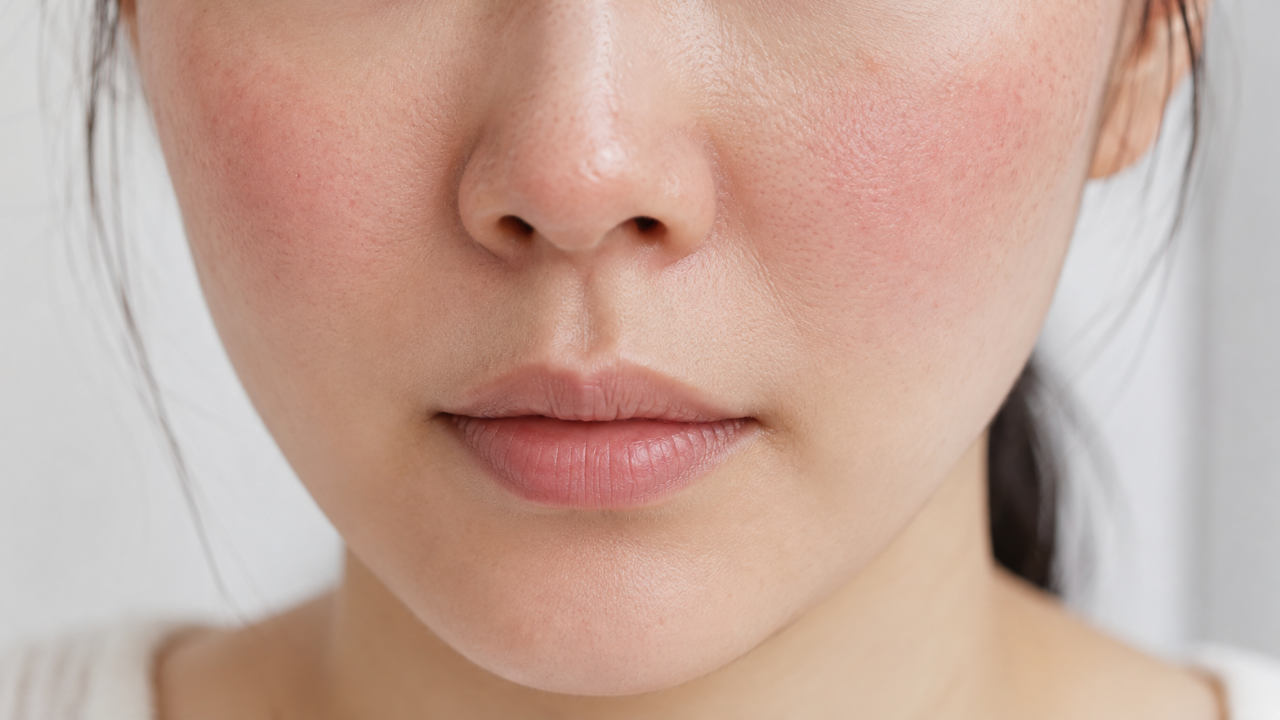
Keywords: Facial Redness Treatment in Songdo, Facial Flushing, Rosacea, Broken Capillaries (Telangiectasia), Vascular Laser |
At Songdo Human Dermatology, we often see patients who tell us their face flushes easily and feels hot. Unlike a brief flush that fades on its own, redness that lingers and keeps coming back may be rosacea, a chronic skin condition — so the first step is pinning down the cause.
Why Does My Face Keep Turning Red?
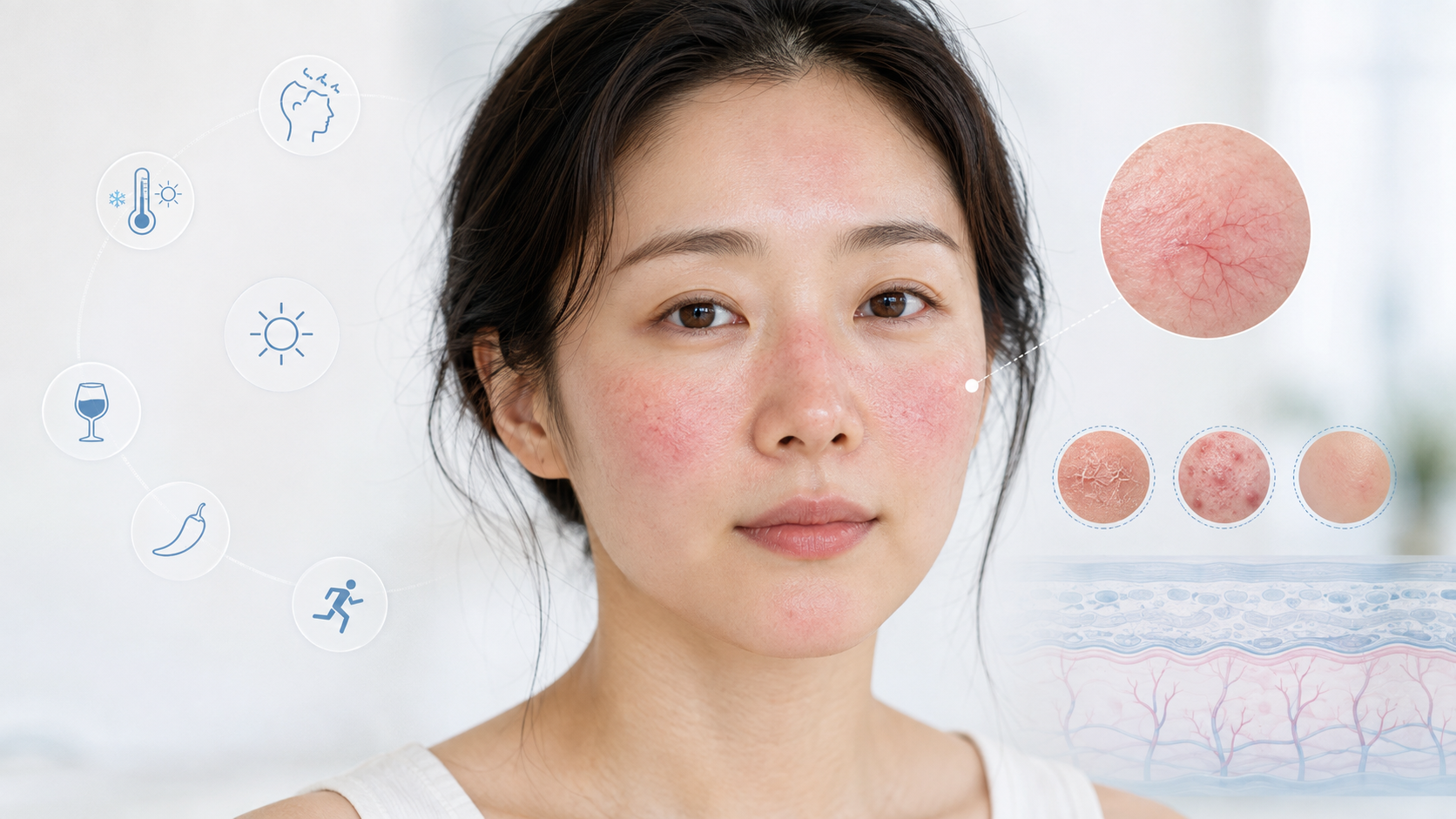
Rosacea is a chronic condition in which the central face (cheeks, nose, forehead, and chin) flushes easily, often with a feeling of warmth or burning, and in which small, dilated blood vessels (telangiectasia) become visible through the skin. The redness tends to flare in response to triggers such as emotional stress, temperature changes, sun exposure, alcohol, spicy foods, and exercise. Unlike acne, rosacea usually does not cause blackheads or whiteheads (comedones), though red papules and pustules may appear. Because it sometimes needs to be distinguished from other conditions such as thyroid disease or lupus (an autoimmune disease in which the immune system attacks the body's own tissues), an accurate diagnosis is best made in person.
Conditions other than rosacea can also make the face red. When persistent redness and flushing follow eczema-like skin changes caused by irritant contact dermatitis, the priority is treating the dermatitis itself — with medication, topical ointments, and dressings. Severe, widespread acne or folliculitis across the face can also leave lasting redness behind; this calls for in-office acne care such as extractions and chemical peels, along with a close look at the lifestyle habits that may be contributing. And when skin becomes irritated and turns red easily without an obvious trigger, it is often described as "sensitive skin."
Triggers That Make Redness Worse
With rosacea, avoiding your triggers is the first step in management. Sudden temperature changes, sun exposure, hot or spicy foods, alcohol, and emotional stress are among the most common. Triggers differ from person to person, so keeping a diary of your flare-ups can help you spot the pattern. When washing your face, avoid very hot water and harsh exfoliation, and protect your skin barrier (the outer protective layer that holds in moisture and keeps irritants out) with a gentle, non-irritating moisturizer.
If your skin is sensitive, even skin care products with active ingredients can cause irritation and worsen the redness. When trying a new product, patch test it first to see how your skin reacts, then introduce it slowly, and keep your routine to as few products as possible.
How Is Rosacea Treated?
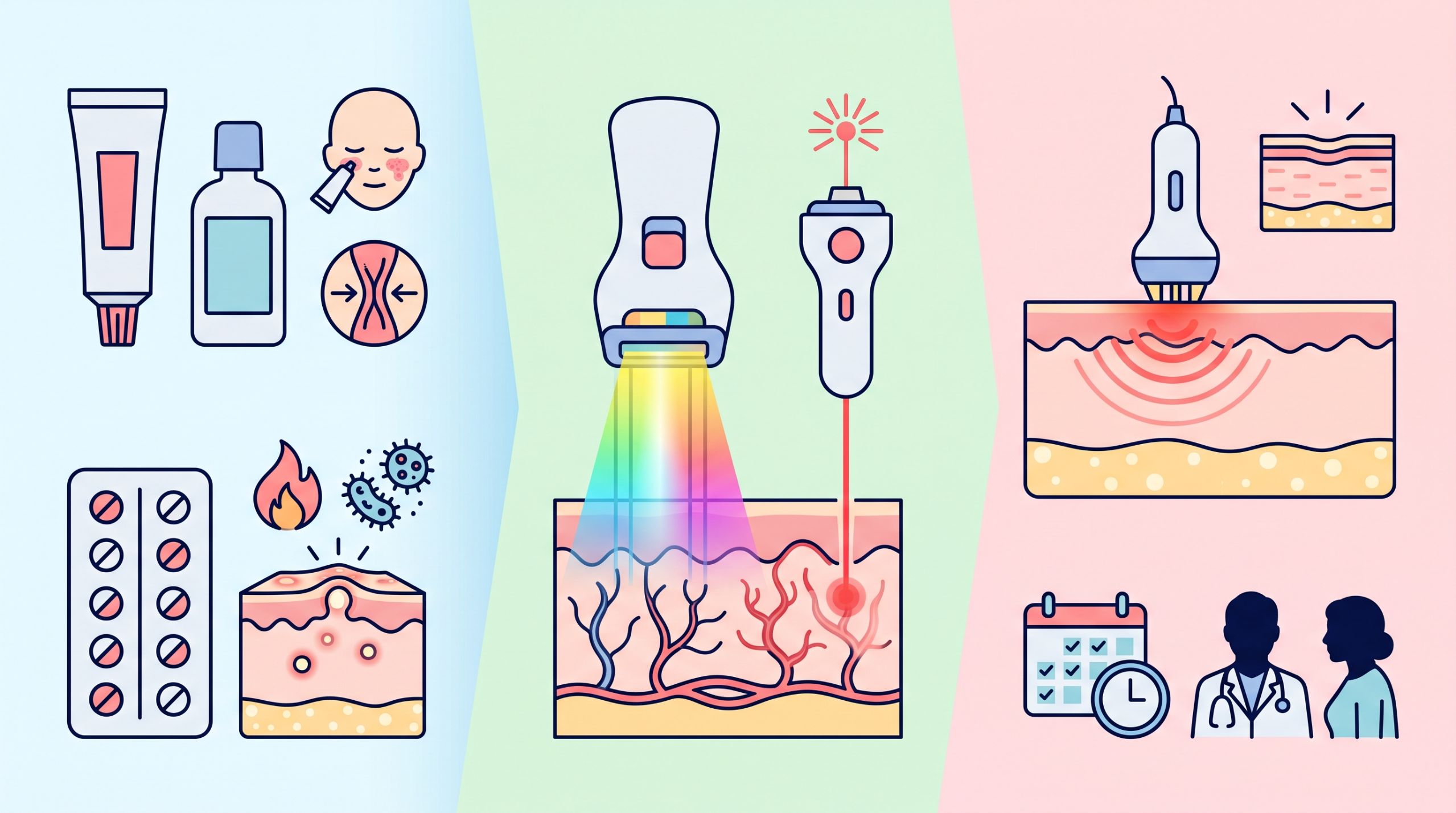
Treatment depends on your symptoms. For red papules and pustules, we use topical medications such as metronidazole, azelaic acid, and ivermectin. In more severe cases, we add an oral antibiotic such as doxycycline or minocycline. For persistent redness, topical vasoconstrictors such as brimonidine or oxymetazoline may be used, and when flushing and facial burning happen often enough to interfere with daily life, low-dose beta-blockers (such as propranolol or carvedilol) can help. That said, blood vessels that have already dilated (telangiectasia) rarely fade with topical or oral medication, so laser or light treatment that targets blood vessels is usually needed. The main options are the pulsed dye laser and intense pulsed light (IPL). The pulsed dye laser is a vascular laser whose 585–595 nm wavelength is absorbed by hemoglobin, the red pigment in blood; IPL is a broad-spectrum light source. Because rosacea is a chronic condition, the goal is long-term control rather than a one-time fix. Improving your skin's overall health and reducing its sensitivity are also important parts of managing redness, and this is where radiofrequency treatment can play a role. By delivering radiofrequency heat that strengthens the dermis, the deeper layer of the skin, it can be a significant help in managing redness.
Daily Habits That Reduce Flare-Ups
Alongside trigger avoidance, consistent sun protection and gentle moisturizing are essential. Ultraviolet (UV) exposure is one of the most common triggers, so daily sunscreen is important year-round. Avoid excessive sauna use, keep the water lukewarm when you wash your face, go easy on scrubs and other exfoliants, and choose gentle, non-irritating skin care products. If the redness keeps coming back, it is better to have the cause and severity evaluated in person than to manage it on your own.
What worsens flushing is different for everyone, so figuring out your own triggers is worth the effort. Once you know them, avoiding them whenever possible can go a long way toward reducing flare-ups.
Frequently Asked Questions
Q. Is frequent facial redness always rosacea?
A. No. Brief flushing during exercise or with strong emotion can be a normal response. But if the redness lingers, keeps coming back, and shows up alongside visible blood vessels or red bumps, rosacea is a likely cause and should be confirmed with an in-office exam.
In women, flushing can also stem from hormonal changes such as menopause, when hot flashes are common, so a hormonal cause is worth ruling out — an evaluation by a gynecologist can help.
Q. Will topical medication alone clear the redness?
A. Red papules and pustules do respond to topical and oral medication. However, blood vessels that have already dilated (telangiectasia) rarely fade with medication alone, so vascular laser or light therapy is typically needed as well. Because rosacea is chronic, treatment is ongoing rather than a one-time course.
Skin affected by rosacea can also be highly sensitive to outside irritants. In some cases, a topical medication itself becomes an irritant and causes stinging or discomfort, so it may need to be stopped or switched. That is all the more reason to manage facial flushing and rosacea consistently, with a long-term plan tailored to your skin.
Q. Does laser treatment remove the redness completely?
A. Vascular lasers can help reduce redness and visible blood vessels, but redness can return, so maintenance sessions are usually needed. Results vary from person to person, and we build your treatment plan after evaluating your skin in person.
If facial redness has been lingering, schedule an appointment at our Songdo clinic to find out whether it is temporary flushing or rosacea. From there, we can recommend a treatment plan that targets the cause.
This content is general information about facial redness and rosacea treatment provided at Songdo Human Dermatology. Diagnosis and treatment are determined during an in-person examination, based on each patient's individual condition.