

HUMAN Dermatology - Botox (Botulinum Toxin) in Songdo, Incheon | Songdo Human Dermatology

HUMAN Dermatology 워드마크 로고
  • About Us
  • Laser Treatments
  • Anti-Aging & Injectables
  • Medical Dermatology
  • Contact Us
진료시간 : 10:00 - 19:00

Anti-Aging & Injectables

Anti-Aging & Injectables

  1. Anti-Aging & Injectables
Botox (Botulinum Toxin) in Songdo, Incheon | Songdo Human Dermatology

Botox (Botulinum Toxin) in Songdo, Incheon | Songdo Human Dermatology

How botulinum toxin works and what to keep in mind

by HUMAN Dermatology2026.08.28

Keywords: Botox Treatment in Songdo, Botulinum Toxin, Expression Lines, Frown Lines, Masseter Botox (Jawline Slimming)


At Songdo Human Dermatology, many patients tell us they want to smooth their forehead and frown lines. What most people call "Botox" is technically a botulinum toxin injection. Once you understand how it works, it is easy to see which wrinkles it can actually help.


How Does Botulinum Toxin Smooth Wrinkles?


Botulinum toxin temporarily blocks the release of acetylcholine, the chemical messenger that tells muscles to contract, so the overactive muscles behind your facial expressions gently relax. This smooths the dynamic wrinkles (lines that appear when your face moves) that form as those muscles crease the skin over and over. The key point is that it works on wrinkles caused by muscle movement, while those caused by volume loss call for a different approach. The effect is not permanent — once muscle function returns after a few months, another injection is needed.
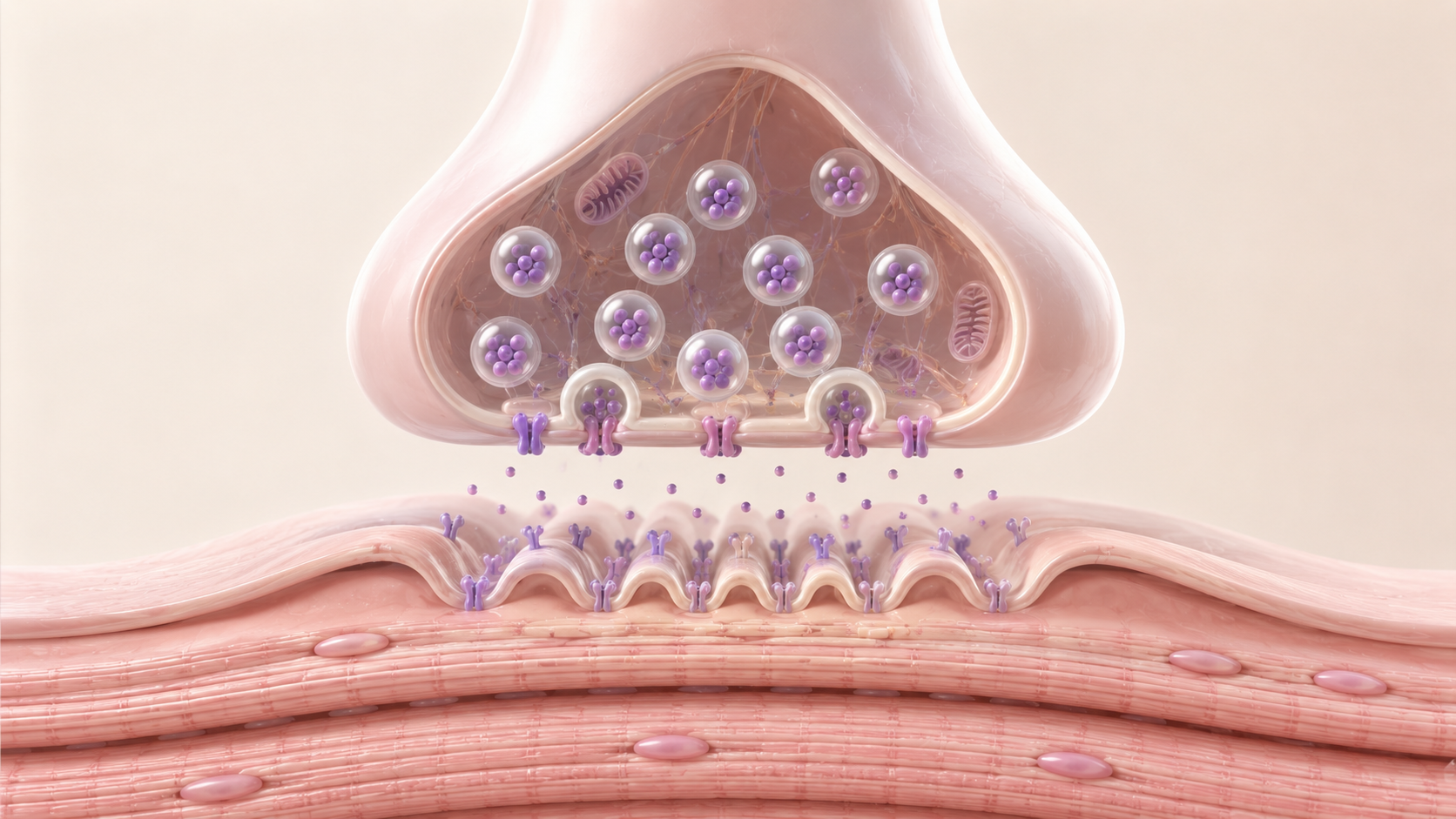

Songdo Human Dermatology_nerve-muscle junction where botulinum toxin acts


Which Areas Can Be Treated?


The most common areas are the expression lines of the upper face — frown lines between the eyebrows (glabellar lines), horizontal forehead lines, and crow's feet around the eyes. Botulinum toxin is also used to slim the jawline by relaxing the masseter (the jaw muscle), to soften vertical neck bands, and to treat excessive underarm sweating (hyperhidrosis). Injection sites and doses vary by area and goal, so treatment should be planned by a specialist who knows facial muscle anatomy well.
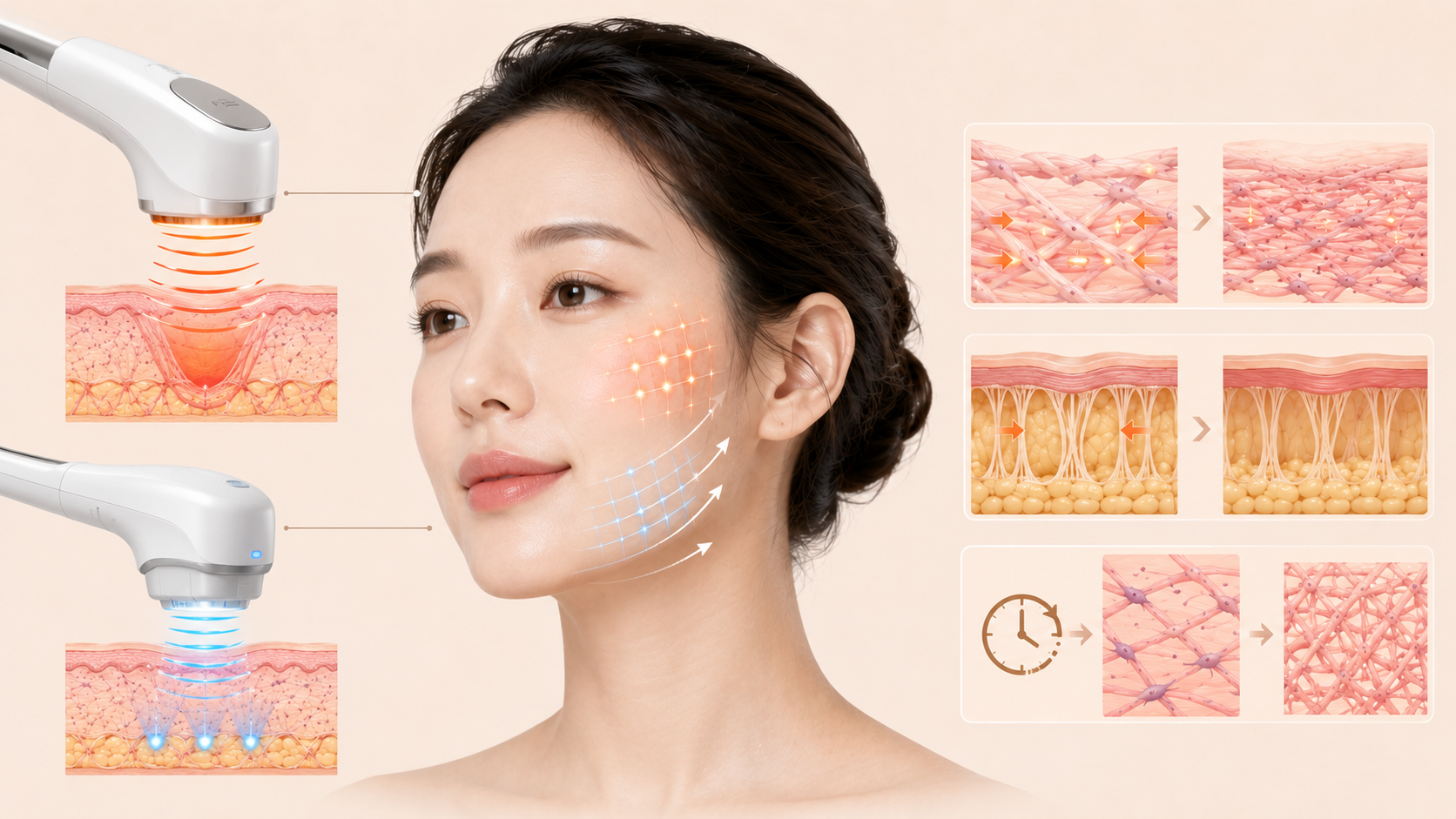

Songdo Human Dermatology_facial rejuvenation treatment illustration


How Long Does It Last, and How Is It Done?


The effect usually appears within days and lasts several months, then wears off gradually. For hyperhidrosis, the effect has been reported to last 4 to 5 months on average. Injections are given with a very fine needle (30 to 32 gauge). The procedure is quick, and most people get back to their normal routine soon afterward. Units are not interchangeable from one botulinum toxin product to another, so doses cannot be compared one-to-one — the right dose is determined at your consultation. Botulinum toxin is a prescription medication, so it must be prescribed and administered in a medical setting.


Side Effects and Precautions


The treatment is generally safe when performed by a trained provider, and minor bruising or swelling at the injection site is common but usually clears up within a few days. If the toxin spreads to a nearby muscle after a frown-line injection, a drooping, heavy-feeling eyelid (ptosis) can occur; with an experienced injector the rate is low (under 2%), and it usually resolves on its own within 2 to 3 weeks. Overtreating the forehead muscle can lead to brow drooping, and some people get a headache after injections in the upper face. Be sure to tell us before treatment if you are pregnant or breastfeeding, or if you have a neuromuscular condition.


Frequently Asked Questions


Q. Will botulinum toxin make my face look frozen or unnatural?

A. With the right dose for each area, you can keep your natural expressions. A stiff, frozen look comes from injecting too much, which is why we tailor the dose to your facial muscles.


Q. How often do I need injections?

A. The effect wears off as muscle function returns, and most people come back for a touch-up after a few months. Exactly how often varies by treatment area and by person, so we will suggest a schedule based on how your muscles respond.


Q. Can botulinum toxin treat hollow cheeks or smile lines (nasolabial folds)?

A. Botulinum toxin works on wrinkles caused by muscle movement. Lines and sagging that come from volume loss need a different treatment, so we start with a consultation to see which one is driving your concern before choosing an approach.


Q. What side effects can Botox cause?

A. Side effects mainly occur when the product spreads to a nearby muscle or when too much is injected, and can include eyelid drooping, unnatural expressions, asymmetry, bruising or itching at the injection site, and headache. Fortunately, most of these resolve on their own within 1 to 3 months.


If expression lines are bothering you, schedule a consultation at our Songdo clinic so we can pin down what kind of wrinkle you are dealing with. Whether it is an expression line or a volume issue, we can decide on the right approach together.

This content is general information about botulinum toxin treatment provided at Songdo Human Dermatology. Diagnosis and treatment are determined during an in-person examination, based on each patient's individual condition.


목록보기

'Anti-Aging & Injectables' 다른 글

  • Nonsurgical Skin Tightening & Lifting in Songdo, Incheon | Songdo Human Dermatology

    Keywords: Skin Tightening and Lifting in Songdo, Skin Elasticity, Radiofrequency, Ultrasound, CollagenAt Songdo Human Dermatology, patients often tell us their skin has started to sag and lose firmness. With nonsurgical lifting, understanding how it works — and where its limits are — goes a long way toward avoiding disappointment.Why Does Skin Lose Firmness and Sag?With age, collagen and elastin — the proteins that give skin its structure and elasticity — break down, and as the support from the fat and ligaments underneath weakens, the skin stretches and settles downward. Sun exposure accelerates the process, a phenomenon known as photoaging. Loss of firmness is therefore not just a surface problem; it is the combined result of changes across several layers.How Does Nonsurgical Lifting Work?Radiofrequency (RF) and focused ultrasound devices — high-intensity focused ultrasound (HIFU) and micro-focused ultrasound (MFU) — heat the dermis and the layers beneath it without damaging the surface of the skin (nonablative), contracting existing collagen right away and stimulating new collagen production over the following months. The heat also tightens the fibrous septa (the connective-tissue walls that divide the fat into compartments) beneath the skin, which adds to the firming effect. Because there are no incisions, downtime is minimal.Who Is a Good Candidate, and What Results Can You Expect?Nonsurgical tightening works best for people with mild-to-moderate skin laxity and no severe sagging — those in the early stages of losing elasticity, or those who want to get ahead of it before surgery becomes a consideration. Most patients who see a clear benefit are roughly 25 to 55 years old, though it can still be worth considering outside that range for anyone who would rather avoid surgery. The brow and forehead, midface, jawline, and neck tend to respond best. Clinical studies report roughly 18% to 30% improvement in laxity of the lower face, neck, and eye area — a visible change, though not on the scale of surgery. Treating the forehead, for example, typically lifts the brow by 1 to 2 mm over 60 to 90 days, and repeat sessions are usually needed to maintain the result. When the skin is severely lax, a nonsurgical approach can only do so much, and a facelift may be the better option — surgery remains the gold standard for correcting significant laxity.Side Effects and PrecautionsNonsurgical tightening is generally safe. Redness (erythema) and swelling can last from a few hours to a few days after treatment. As treatment protocols have moved away from very high-energy settings, burns and fat atrophy have become rare, and scarring or pigment changes are uncommon as well. That said, it helps to keep expectations realistic: more invasive approaches tend to deliver more visible results but come with more downtime and greater risk — which is why choosing the approach that fits your skin is the most important step.Frequently Asked QuestionsQ. Can nonsurgical lifting do as much as a facelift?A. Nonsurgical lifting aims for gradual, natural-looking improvement rather than a dramatic surgical change. HIFU and radiofrequency tighten the skin and improve mild sagging by stimulating new collagen production, but they cannot match a facelift, which repositions the deeper tissues and removes excess skin. For severe sagging, nonsurgical care alone can only do so much, and a facelift may be the better option. The right approach depends on how much sagging is present, so it is best determined at a consultation.Q. Will I see results after one session?A. Results usually build gradually rather than arriving all at once. With collagen-stimulating treatments such as HIFU, radiofrequency, and lasers, the change develops over two to six months. Depending on the area and your skin condition, several sessions may be needed.Q. What is a thread lift?A. A thread lift is a minimally invasive procedure that lifts and anchors sagging tissue with dissolvable threads, and it is worth considering for mild laxity. The results may not last as long as those of a facelift, and severe sagging is beyond what threads can do, so candidacy is best assessed at a consultation.Q. How long do lifting results last?A. Lifting treatments produce some immediate tightening, and a fuller lifting effect develops over the next two to six months as new collagen forms. Both HIFU and radiofrequency work through this collagen remodeling process, and clinical studies report that results last roughly six months to two years. How long they last varies with your skin condition, age, and lifestyle, so we generally recommend maintenance sessions every six months to a year.Q. What are the options for treating facial wrinkles?A. The approach depends on the cause. Dynamic wrinkles formed by repeated facial expression respond well to botulinum toxin, which relaxes the muscles that create them, while static wrinkles from sagging and loss of elasticity respond better to collagen-stimulating treatments such as radiofrequency, ultrasound, or skin boosters. Ingredients such as retinoids can help as part of a daily skincare routine. In most cases the best results come from combining treatments once the cause has been identified.If sagging or loss of firmness is bothering you, the place to start is a consultation at our Songdo clinic to see how much laxity is present. From there we can decide together whether a nonsurgical or a surgical approach makes more sense for you.This content is general information about the skin tightening and lifting treatments provided at Songdo Human Dermatology. Diagnosis and treatment are determined during an in-person examination, based on each patient's individual condition.

    썸네일 이미지
  • Skin Boosters in Songdo, Incheon | Songdo Human Dermatology

    Keywords: skin boosters in Songdo, skin boosters, hyaluronic acid, skin hydration, skin textureSkin boosters are not about filling the skin — it is about making the skin healthier. If your skin feels drier than before, if your makeup no longer goes on smoothly, or if fine lines and pores have become more noticeable, a simple lack of moisture may not be the only reason.What Do Skin Boosters Do?As we age, the skin loses hyaluronic acid and collagen, and its ability to repair itself gradually declines. The skin becomes thinner and less firm, and it can look drier and duller than before.Skin boosters are treatments that improve the environment within the skin. Microinjections deliver the ingredients the skin needs, helping it hold moisture on its own and build healthy collagen.Unlike fillers, which add volume to the face, skin boosters aim to restore skin texture, firmness, hydration, and a natural glow.Which Type Is Right for You?Not all skin boosters are the same. The ingredient you need depends on the condition of your skin.Hyaluronic AcidA hydrating ingredient that replenishes moisture within the skinHyaluronic acid occurs naturally in the skin. With age, levels in the skin decline, and dryness and fine lines increase. Delivered as microinjections, hyaluronic acid draws water into the skin to keep it hydrated and helps improve texture and radiance.PN (Polynucleotide)A regenerative ingredient that supports skin repairPN supports the skin's repair process after damage. By creating an environment in which the skin can recover on its own, it can help improve texture, firmness, and fine lines, and it is often used for sensitized skin. It is also widely used when the skin barrier is weakened, or for recovery after laser treatment.CollagenAn ingredient that increases skin densityCollagen is the main structural protein behind skin firmness. From our twenties onward it steadily decreases, so the skin becomes thinner and loses firmness. A collagen-based skin booster can help increase skin density and create a firmer texture.PDLLA (Poly-D,L-lactic Acid)An ingredient that helps the skin build its own collagenPDLLA stimulates new collagen production in the skin. Rather than filling the skin immediately, it works gradually, so the skin can feel firmer over time. It is often chosen by those who want to improve the appearance of pores, fine lines, and firmness.Which Ingredient Is Best?In fact, there is no single best ingredient. What matters more is what your skin is lacking right now.If dryness is your concernHyaluronic acidIf your skin has lost its ability to recoverPNIf skin density has decreasedCollagenIf loss of firmness is your concernPDLLADepending on the condition of your skin, one ingredient may be enough; when needed, combining two or more ingredients in stages can lead to more satisfying results.Who Is a Good Candidate?✔ Skin that feels dry and tight✔ Fine lines that are becoming more noticeable✔ Skin with enlarged pores or uneven texture✔ Skin that feels less firm than before✔ Skin that needs to recover after laser treatment✔ Anyone who wants naturally younger-looking skinAftercareRedness, small bruises or mild swelling can occur after treatment, but these usually resolve within a few days.For recovery, generous moisturizing and sun protection are important, and on the day of treatment it is best to avoid alcohol, saunas, and strenuous exercise.The right ingredient and injection depth also vary with the condition of your skin, so it is most important to plan treatment after a thorough consultation with an experienced medical team.Frequently Asked QuestionsQ. How are skin boosters different from fillers?A. Fillers restore volume by filling in areas where volume has been lost. Skin boosters improve hydration, texture, firmness, and radiance across the skin as a whole. In other words, the focus is on making the skin itself healthier rather than changing the shape of the face.Q. When will I see results?A. With hyaluronic acid, you may notice improved hydration relatively quickly. PN, collagen, and PDLLA need time for the skin to repair itself and build collagen, so changes appear gradually over several weeks to a few months.Q. Can I combine more than one type of skin booster?A. Yes. In many cases, combining different ingredients to suit your skin can help improve hydration, texture and firmness together. Not everyone needs the same combination, though, so it is important to assess your skin accurately before planning treatment.No Two Patients' Skin Needs the Same ThingDry skin and skin that has lost firmness need different treatment, and sensitive skin and aging skin call for different approaches as well. A good skin booster is not about using a well-known brand — it is about choosing the right ingredient for your skin.At Songdo Human Dermatology, we assess hydration, firmness, skin thickness, sensitivity, and signs of aging, then build a personalized plan around the most suitable option — hyaluronic acid, PN, collagen, PDLLA, or a combination. Natural, healthy change in the skin begins with understanding the environment within it.This content is general information about the skin booster treatments provided at Songdo Human Dermatology. Diagnosis and treatment are determined during an in-person examination, based on each patient's individual condition.

    썸네일 이미지