

Keywords: Skin Tightening and Lifting in Songdo, Skin Elasticity, Radiofrequency, Ultrasound, Collagen |
At Songdo Human Dermatology, patients often tell us their skin has started to sag and lose firmness. With nonsurgical lifting, understanding how it works — and where its limits are — goes a long way toward avoiding disappointment.
Why Does Skin Lose Firmness and Sag?
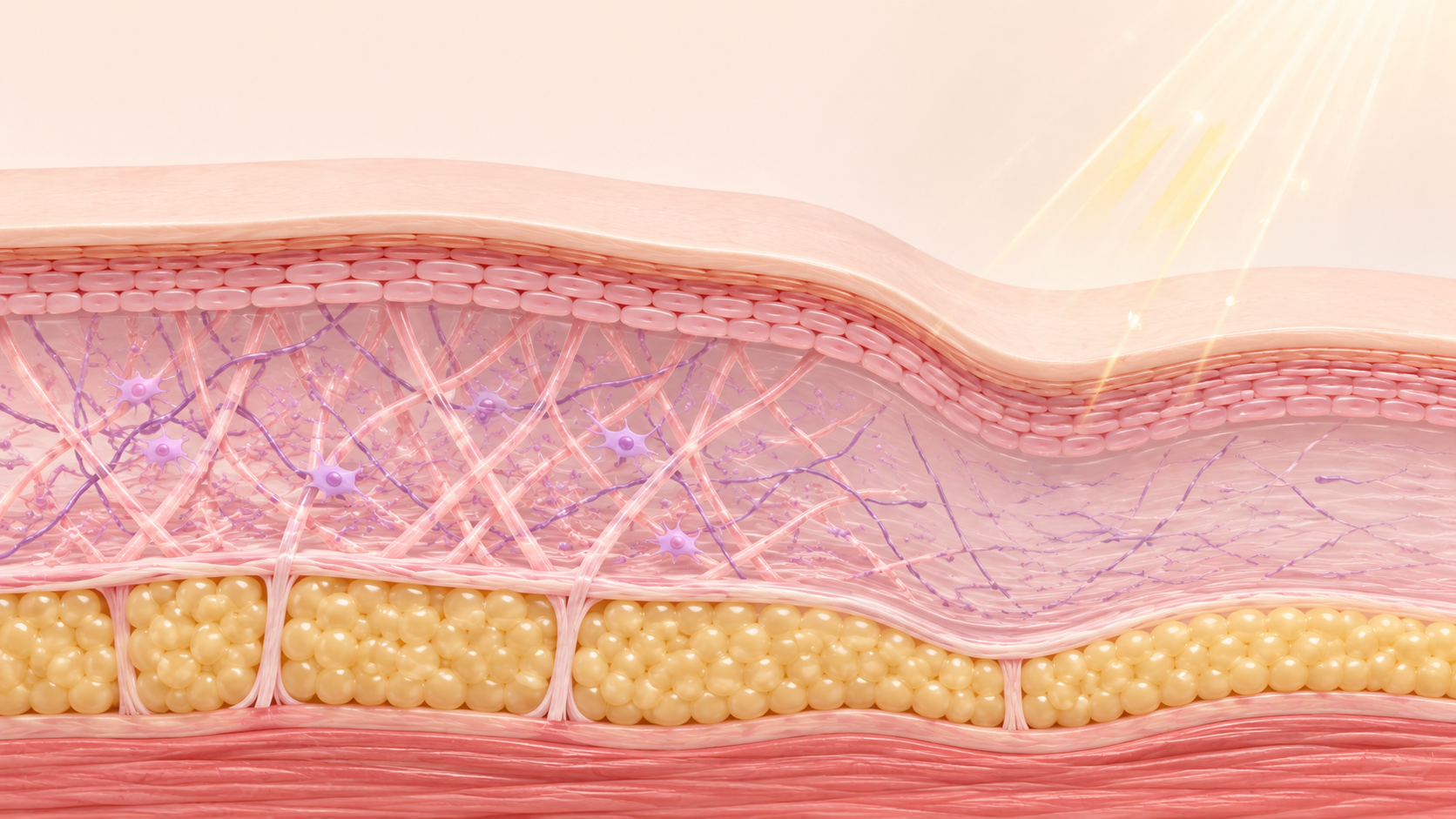
With age, collagen and elastin — the proteins that give skin its structure and elasticity — break down, and as the support from the fat and ligaments underneath weakens, the skin stretches and settles downward. Sun exposure accelerates the process, a phenomenon known as photoaging. Loss of firmness is therefore not just a surface problem; it is the combined result of changes across several layers.
How Does Nonsurgical Lifting Work?
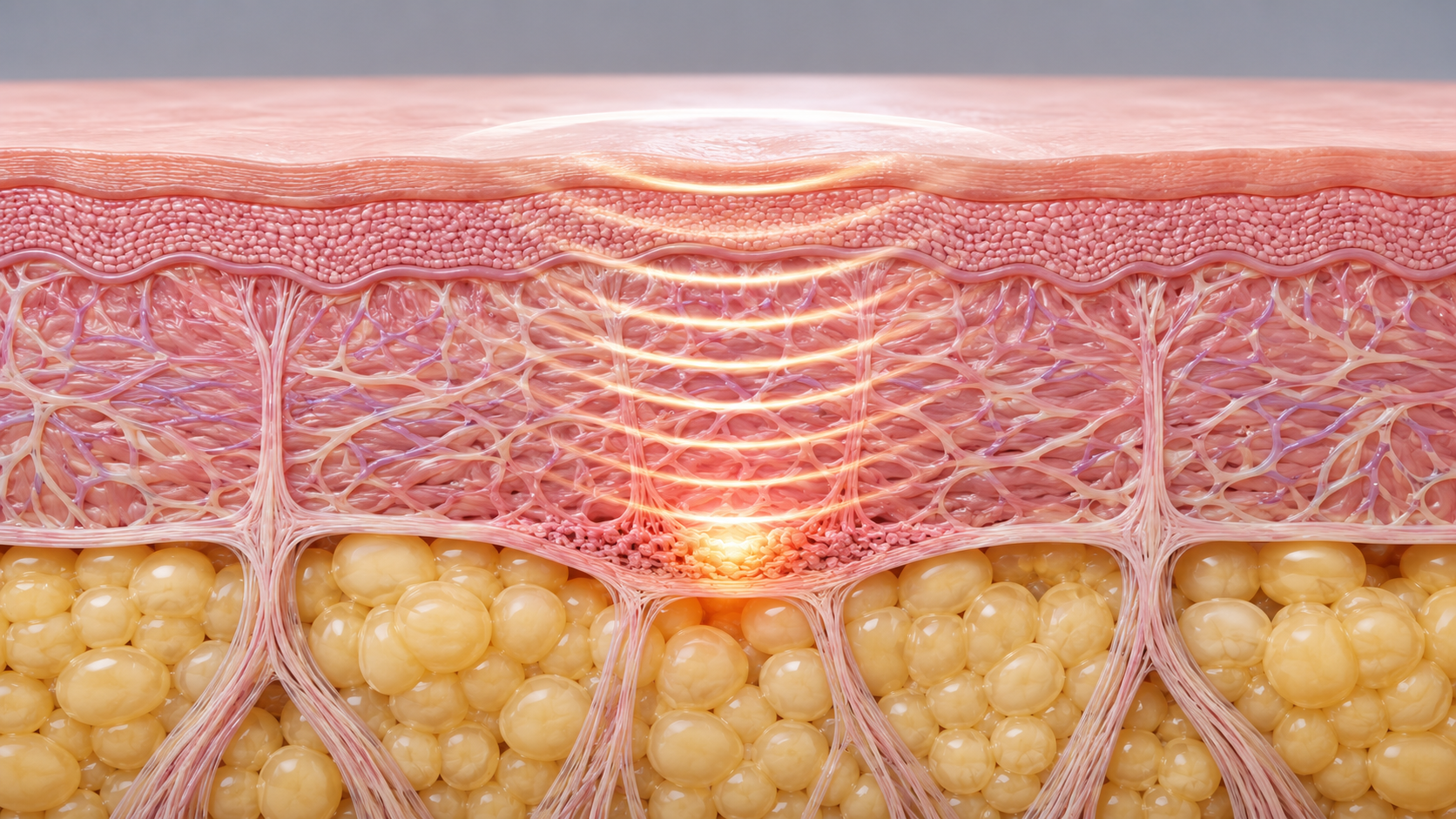
Radiofrequency (RF) and focused ultrasound devices — high-intensity focused ultrasound (HIFU) and micro-focused ultrasound (MFU) — heat the dermis and the layers beneath it without damaging the surface of the skin (nonablative), contracting existing collagen right away and stimulating new collagen production over the following months. The heat also tightens the fibrous septa (the connective-tissue walls that divide the fat into compartments) beneath the skin, which adds to the firming effect. Because there are no incisions, downtime is minimal.
Who Is a Good Candidate, and What Results Can You Expect?
Nonsurgical tightening works best for people with mild-to-moderate skin laxity and no severe sagging — those in the early stages of losing elasticity, or those who want to get ahead of it before surgery becomes a consideration. Most patients who see a clear benefit are roughly 25 to 55 years old, though it can still be worth considering outside that range for anyone who would rather avoid surgery. The brow and forehead, midface, jawline, and neck tend to respond best. Clinical studies report roughly 18% to 30% improvement in laxity of the lower face, neck, and eye area — a visible change, though not on the scale of surgery. Treating the forehead, for example, typically lifts the brow by 1 to 2 mm over 60 to 90 days, and repeat sessions are usually needed to maintain the result. When the skin is severely lax, a nonsurgical approach can only do so much, and a facelift may be the better option — surgery remains the gold standard for correcting significant laxity.
Side Effects and Precautions
Nonsurgical tightening is generally safe. Redness (erythema) and swelling can last from a few hours to a few days after treatment. As treatment protocols have moved away from very high-energy settings, burns and fat atrophy have become rare, and scarring or pigment changes are uncommon as well. That said, it helps to keep expectations realistic: more invasive approaches tend to deliver more visible results but come with more downtime and greater risk — which is why choosing the approach that fits your skin is the most important step.
Frequently Asked Questions
Q. Can nonsurgical lifting do as much as a facelift?
A. Nonsurgical lifting aims for gradual, natural-looking improvement rather than a dramatic surgical change. HIFU and radiofrequency tighten the skin and improve mild sagging by stimulating new collagen production, but they cannot match a facelift, which repositions the deeper tissues and removes excess skin. For severe sagging, nonsurgical care alone can only do so much, and a facelift may be the better option. The right approach depends on how much sagging is present, so it is best determined at a consultation.
Q. Will I see results after one session?
A. Results usually build gradually rather than arriving all at once. With collagen-stimulating treatments such as HIFU, radiofrequency, and lasers, the change develops over two to six months. Depending on the area and your skin condition, several sessions may be needed.
Q. What is a thread lift?
A. A thread lift is a minimally invasive procedure that lifts and anchors sagging tissue with dissolvable threads, and it is worth considering for mild laxity. The results may not last as long as those of a facelift, and severe sagging is beyond what threads can do, so candidacy is best assessed at a consultation.
Q. How long do lifting results last?
A. Lifting treatments produce some immediate tightening, and a fuller lifting effect develops over the next two to six months as new collagen forms. Both HIFU and radiofrequency work through this collagen remodeling process, and clinical studies report that results last roughly six months to two years. How long they last varies with your skin condition, age, and lifestyle, so we generally recommend maintenance sessions every six months to a year.
Q. What are the options for treating facial wrinkles?
A. The approach depends on the cause. Dynamic wrinkles formed by repeated facial expression respond well to botulinum toxin, which relaxes the muscles that create them, while static wrinkles from sagging and loss of elasticity respond better to collagen-stimulating treatments such as radiofrequency, ultrasound, or skin boosters. Ingredients such as retinoids can help as part of a daily skincare routine. In most cases the best results come from combining treatments once the cause has been identified.
If sagging or loss of firmness is bothering you, the place to start is a consultation at our Songdo clinic to see how much laxity is present. From there we can decide together whether a nonsurgical or a surgical approach makes more sense for you.
This content is general information about the skin tightening and lifting treatments provided at Songdo Human Dermatology. Diagnosis and treatment are determined during an in-person examination, based on each patient's individual condition.