
HUMAN Dermatology - Vitiligo Treatment in Songdo, Incheon | Songdo Human Dermatology

HUMAN Dermatology 워드마크 로고
  • About Us
  • Laser Treatments
  • Anti-Aging & Injectables
  • Medical Dermatology
  • Contact Us
진료시간 : 10:00 - 19:00

Medical Dermatology

Medical Dermatology

  1. Medical Dermatology
Vitiligo Treatment in Songdo, Incheon | Songdo Human Dermatology

Vitiligo Treatment in Songdo, Incheon | Songdo Human Dermatology

Vitiligo: causes and treatment, made simple

by HUMAN Dermatology2026.09.01

Keywords:  vitiligo treatment in Songdo, vitiligo, melanocytes, excimer laser, phototherapy


At Songdo Human Dermatology, we often see patients who come in worried after noticing white patches on their skin. Understanding what causes vitiligo and how it usually progresses takes away a lot of that uncertainty.


Why Does Vitiligo Happen?


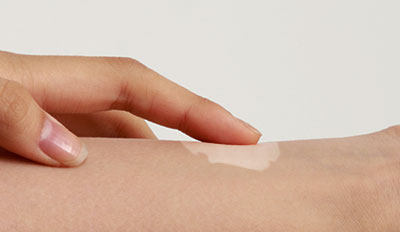
Vitiligo is an acquired condition in which melanocytes (the cells that make melanin, the pigment that gives skin its color) disappear, leaving sharply demarcated, milky-white patches. No single cause explains it. A genetic predisposition, autoimmunity (immune cells attacking the body's own melanocytes), and cellular stress are thought to act together. Research points to CD8+ T cells, a type of immune cell, as the main drivers of that attack. Vitiligo is not contagious. Because some people with vitiligo also develop conditions such as autoimmune thyroid disease, we may recommend testing for those as well.
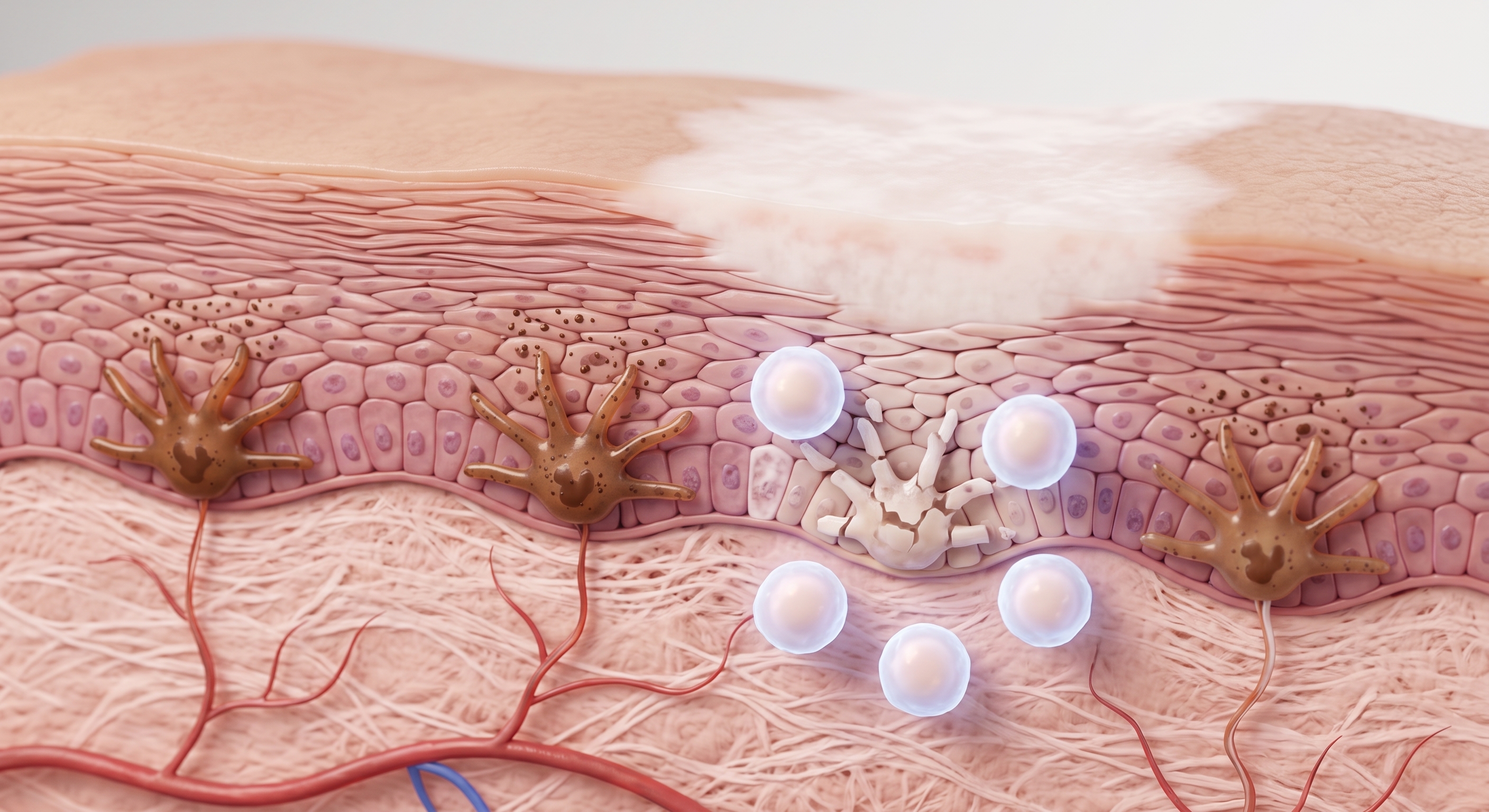

Songdo Human Dermatology_how vitiligo develops


Where and How Does It Appear?


Patches can appear anywhere on the body, including the face, hands, and feet, and new patches sometimes form where the skin was injured or rubbed, a response called the Koebner phenomenon. Hair growing inside a patch can lose its color too (leukotrichia). Other conditions, such as tinea versicolor (a common fungal infection), can cause similar-looking white patches, so we tell them apart with a clinical exam and, when it helps, a Wood's lamp (a special ultraviolet light).


How Do We Treat It?


The goal of treatment is repigmentation, bringing back the lost color. Topical options include corticosteroids and calcineurin inhibitors (such as tacrolimus, an ointment that calms the immune response). When the patches are widespread or not responding well to topical treatment, we add phototherapy. In particular, narrowband UVB (NB-UVB) and the 308 nm excimer laser are used as first-line treatment for localized vitiligo. Excimer laser sessions are typically scheduled two to three times a week, and repigmentation generally builds over a series of treatments. The face, neck, and trunk tend to respond relatively well, while the hands and feet respond more slowly. Because long-term use of calcineurin inhibitors requires caution, every treatment is decided by a dermatologist during your visit.
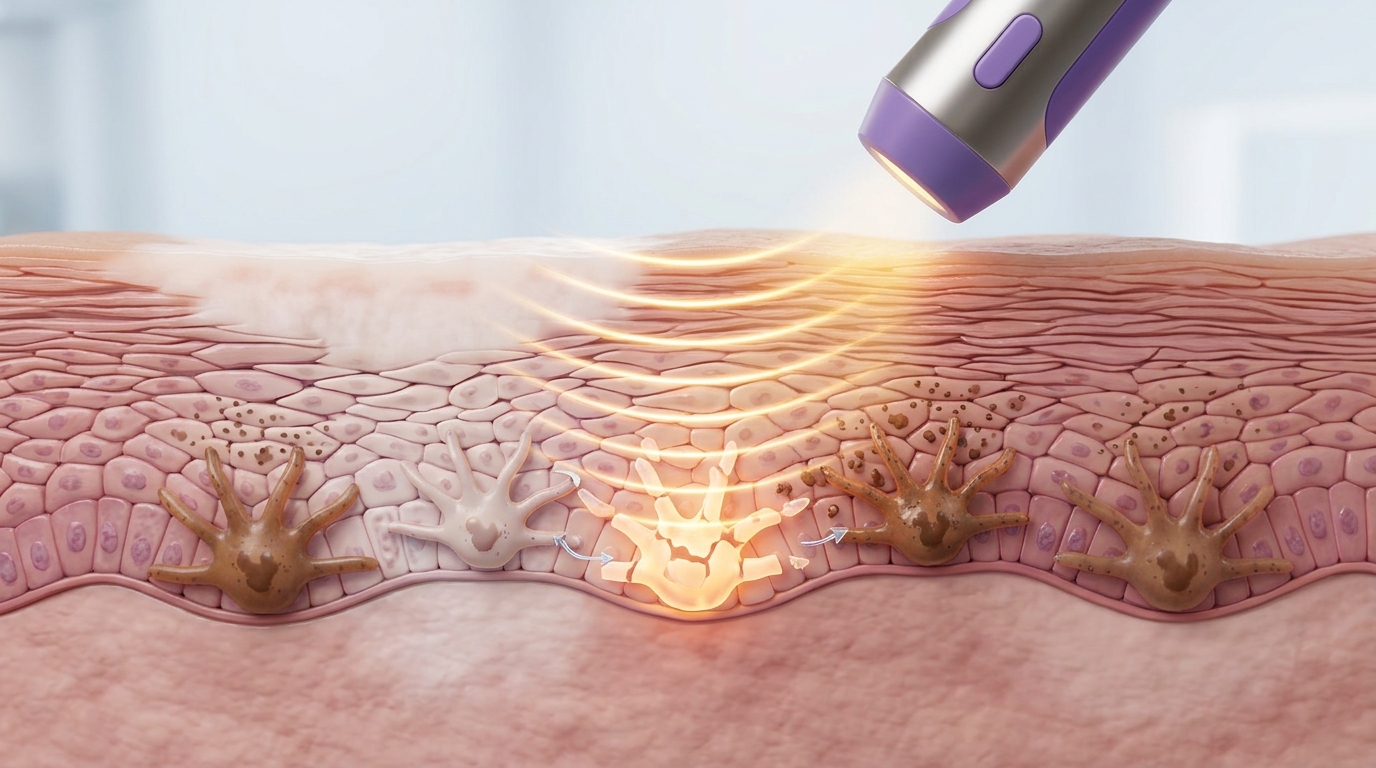

Songdo Human Dermatology_excimer laser treatment for vitiligo


Good to Know


Vitiligo responds better in areas that still have normally pigmented hair. Conversely, some areas, such as the lips and fingertips, are slower to respond. Treatment that starts earlier and stays consistent tends to work better, so if the patches are spreading, it is worth being seen sooner rather than later. Skin that has lost its pigment burns easily, so daily sunscreen and sun-protective clothing matter, too.


Frequently Asked Questions


Q. Is vitiligo contagious?

A. No. Vitiligo is not an infection; it is an immune-related condition. That said, some patients also develop conditions such as autoimmune thyroid disease, so we may recommend testing for those as well.


Q. Will my skin return completely to its original color?

A. Results vary from person to person and from one area of the body to another. Areas that still have normally pigmented hair respond better, while areas such as the lips and fingertips are slower to respond. Earlier, more consistent treatment tends to bring better results.


Q. Can I just leave it alone?

A. Vitiligo can spread over time, and other autoimmune conditions sometimes occur alongside it. It is worth having the patches evaluated to rule out conditions that look similar and to plan care going forward.


If you have noticed white patches on your skin, schedule a consultation at our Songdo clinic so we can rule out other conditions. From there, we can tailor a treatment plan to the location and extent of the patches.

This content is general information about the vitiligo treatments provided at Songdo Human Dermatology. Diagnosis and treatment are determined during an in-person examination, based on each patient's individual condition.
목록보기

'Medical Dermatology' 다른 글

  • Psoriasis Treatment in Songdo, Incheon | Songdo Human Dermatology

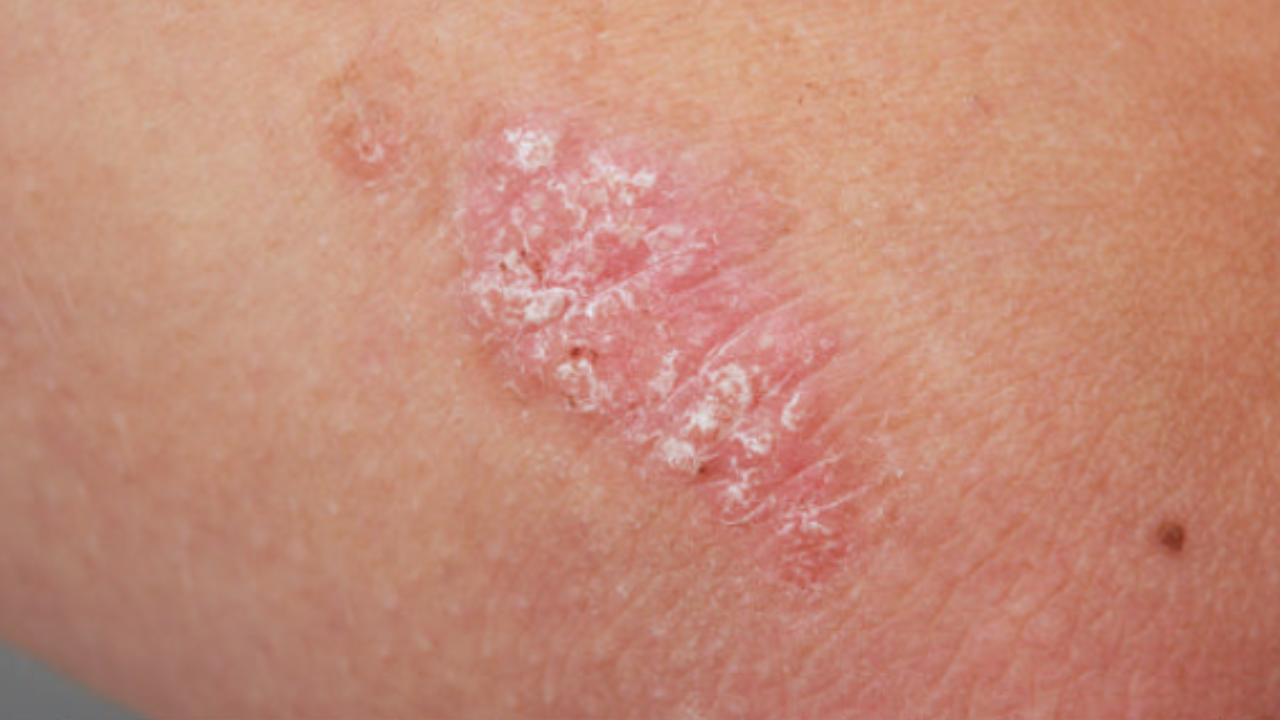
    Keywords: psoriasis treatment in Songdo, psoriasis, plaque psoriasis, phototherapy, UVBAt Songdo Human Dermatology, patients who come in saying "these red, flaky patches keep coming back" are often worried about psoriasis. Because psoriasis is a long-term condition, it helps to understand what drives it and how to keep it under control.What Causes Psoriasis?Psoriasis is a chronic inflammatory condition in which an overactive immune system makes keratinocytes (the cells that form the skin's surface) multiply far too quickly, so thick white scale builds up on red, raised plaques. Th17 cells, a subset of the T cells that drive immune responses, are thought to play a central role. In people with a genetic predisposition, triggers such as infection, skin irritation, or stress can bring on the first lesions or make existing ones worse. New lesions can also form where the skin was injured, a response called the Koebner phenomenon. Psoriasis is not contagious.What Does It Look Like?The most common form is plaque psoriasis, which appears as well-defined red plaques covered with silvery-white scale. Plaques tend to appear on the knees, elbows, scalp, and buttocks, often at sites exposed to repeated friction or pressure. Psoriasis typically follows a long-term course, cycling between flare-ups and periods of improvement, so consistent management matters more than any single course of treatment.How We Treat PsoriasisWe take a stepwise approach based on how widespread and severe the disease is. Topical treatments include corticosteroids, a vitamin D analogue (calcipotriene), and tazarotene (a retinoid), alongside regular moisturizing. Topical calcineurin inhibitors may also be used on the face and in skin folds. For widespread or moderate-to-severe disease, we add phototherapy; in particular, narrowband UVB (NB-UVB, 311-312 nm) is the first-line phototherapy for chronic plaque psoriasis. The 308 nm excimer laser is also used for localized lesions. For more severe disease, oral medications (cyclosporine, methotrexate, acitretin) or biologics (injections that target specific immune signals) are used. These systemic treatments always require close monitoring by a dermatologist, including regular blood tests.Good to KnowPsoriasis is a chronic condition where the goal is control rather than cure. Even when phototherapy clears the skin, relapse is common, so maintenance treatment is usually needed. Ultraviolet light can help, but in some people it makes the condition worse, so any UV exposure should be planned with your dermatologist. Lifestyle factors such as smoking, alcohol, body weight, and stress are also worth addressing.Frequently Asked QuestionsQ. Is psoriasis contagious?A. No. Psoriasis is not an infection; it is a chronic inflammatory skin condition driven by the immune system. It does not spread through contact, so there is no risk of passing it to the people around you.Q. Can psoriasis be cured?A. There is no cure at this time, but psoriasis can be controlled. It is a chronic condition that cycles between flare-ups and periods of improvement, so the goal is long-term control. Even when phototherapy or other treatments clear the skin, relapse is common, which makes ongoing management important.Q. Does sunlight help psoriasis?A. Medically supervised phototherapy such as narrowband UVB is an established psoriasis treatment, but sunbathing or using a tanning bed on your own carries a risk of burns and premature skin aging, and in some people it makes psoriasis worse. Work out a plan with your dermatologist first.If you are in Songdo and a red, flaky rash keeps coming back, start with a consultation to find out whether it is psoriasis. From there, we can build a management plan based on your diagnosis and how severe your symptoms are.This content is general information about the psoriasis treatments provided at Songdo Human Dermatology. Diagnosis and treatment are determined during an in-person examination, based on each patient's individual condition.

    썸네일 이미지
  • Wart and Corn Treatment in Songdo, Incheon | Songdo Human Dermatology

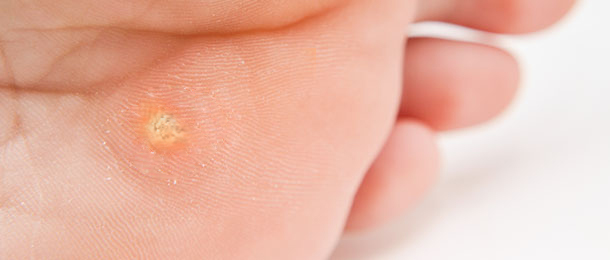
    Keywords: wart and corn treatment in Songdo, wart treatment, corn treatment, warts vs. corns, palmar and plantar wartsAt Songdo Human Dermatology, patients often ask us, "This callus-like bump on the sole of my foot is a corn, right?" Yet when we examine it, it often turns out to be a wart. Warts and corns are easy to confuse because they look alike, but they are completely different conditions — in both cause and treatment.Warts and Corns: What Is the Difference?The biggest difference is the cause. A wart is a skin growth caused by human papillomavirus (HPV) infection, so it can spread to nearby skin and be passed to others. A corn, on the other hand, is skin that has thickened from repeated friction and pressure, so it is not contagious. If gently paring down the surface reveals small black dots, it is more likely a wart; if a translucent core appears, it is more likely a corn. In many cases, though, the two are hard to tell apart by eye, and an in-office examination is needed to confirm the diagnosis.Warts: Causes and TypesWarts develop when HPV enters the body through small cuts or breaks in the skin. The virus spreads through skin-to-skin contact or by sharing towels or shoes, and it takes hold more easily when the immune system is weakened. Types include common warts on the backs of the hands and on the face, palmar and plantar warts that grow inward on the palms and soles, flat warts that spread easily if left untreated, and genital warts transmitted through sexual contact. The longer a wart goes untreated, the more easily it spreads to nearby skin, so early treatment matters.Corns: Causes and TypesCorns form when repeated friction and pressure — from ill-fitting shoes, walking, or exercise — are concentrated on one spot, thickening the outer layer of the skin. There are two types: soft corns, which form between the toes, and hard corns, which form on pressure points on the hands and feet. In a hard corn, the central core presses on nearby nerves and causes pain.How We Treat Warts and CornsFor both conditions, the key is an accurate diagnosis followed by removal of the lesion. Cryotherapy (freezing) is the most widely used treatment for both warts and corns, sometimes combined with topical salicylic acid to soften the thickened skin. For flat warts, we use a carbon dioxide (CO2) laser. Because warts are caused by a virus, they can come back, so several treatment sessions with follow-up are often needed. Corns recur unless the underlying friction and pressure are relieved, so changing footwear and walking habits goes hand in hand with treatment.Preventing Recurrence and SpreadWith warts, it is important not to touch or pick at them and to avoid sharing personal items such as towels. With corns, habits that reduce friction — wearing shoes that fit properly and using protective pads over pressure points — are the key to preventing recurrence.Frequently Asked QuestionsQ. Can I tell a wart from a corn just by looking?A. If gently paring the surface reveals black dots, it is more likely a wart; if a translucent core appears, it is more likely a corn. On the soles of the feet, however, the two look very similar, so it is safest to have it confirmed by a dermatologist.Q. Do warts go away on their own?A. Some do clear with time, but that can take months to years, and in the meantime they may spread or be passed to others. Removing them early is the better choice.Q. Why do warts keep spreading or coming back?A. Because warts are caused by HPV, the virus can remain in the surrounding skin even after the visible lesion is removed, which can lead to recurrence. Not touching or picking at them helps lower that risk.Q. Do corns go away on their own?A. Not unless the underlying friction and pressure are relieved. Treatment to remove the core is usually needed.Q. Can I remove a wart or corn myself at home?A. We do not recommend it. Cutting one out yourself can spread a wart to nearby skin, and with a corn the core is often left behind, so the pain keeps coming back. It is safer to have it treated after an in-office examination.If you suspect a wart or a corn, do not leave it to guesswork — start with an accurate diagnosis here in Songdo. The right treatment depends on which condition it turns out to be.This content is general information about wart and corn treatment provided at Songdo Human Dermatology. Diagnosis and treatment are determined during an in-person examination, based on each patient's individual condition.

    썸네일 이미지